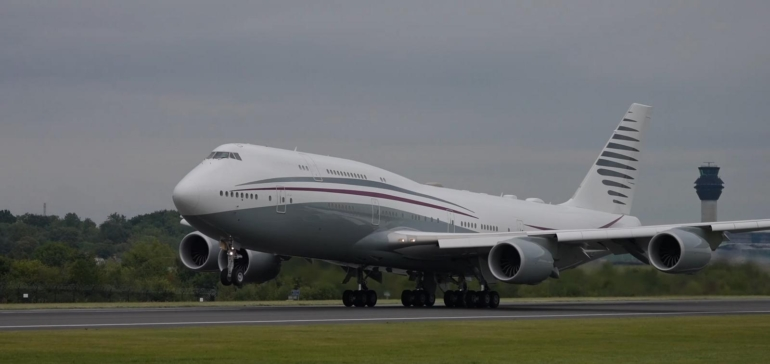
A Legacy Anchored in Obsolete Tech
While the Boeing 747 remains one of the most iconic aircraft in aviation history, its legacy comes with surprising technical baggage. Despite its size, performance, and continued presence in global fleets, most Boeing 747-400 jets still rely on 3.5-inch floppy disks to perform critical navigation and system updates. Each month, technicians must manually load about a dozen floppies—each with just 1.44 megabytes of capacity—into a cockpit port, a process that seems out of place in an industry otherwise defined by innovation and speed.
It’s a jarring contrast for a jet that remained in production until 2023. The 747-400, though technologically advanced when it first debuted in the late 1980s, has not received the digital retrofit that newer aircraft now include as standard. Many commercial carriers and freight operators continue to use these aircraft today—not because of sentimentality, but because retrofitting avionics systems involves enormous cost, regulatory paperwork, and operational downtime. As a result, floppy disk updates remain, remarkably, the norm in dozens of active fleets.
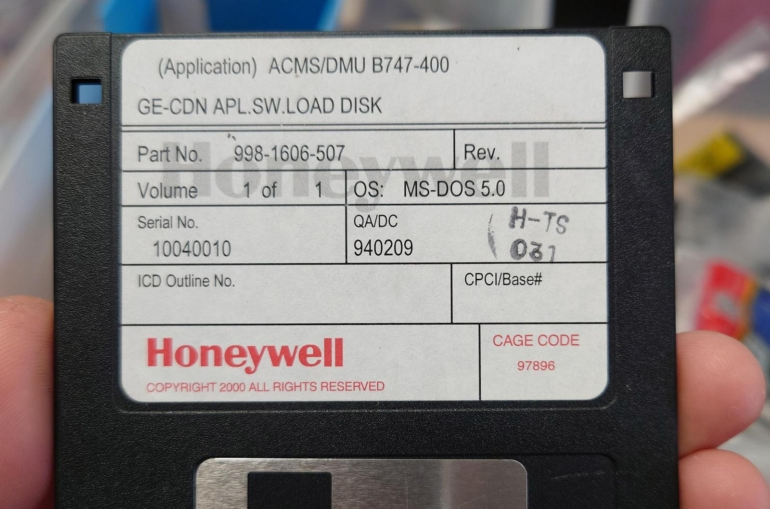
Updating a 747’s navigation system takes about 12 floppy disks.
The image of a technician standing on the tarmac with a fistful of floppy disks may feel nostalgic, even quaint—but in practice, it’s a vivid reminder of how slowly aviation tech evolves once an aircraft leaves the factory. That’s why the Boeing 747-8, and in particular one now owned by the U.S. government, represents more than just an upgrade in comfort or power. It’s a philosophical shift: proof that even legacy airframes can embrace a faster, smarter, and far more secure digital future.
A Digital Leap: The Modern Brain of the 747-8
Enter the Boeing 747-8, the final evolution of the jumbo jet—and a leap forward in both design and digital intelligence. Outfitted with Teledyne Controls’ Network File Server (NFS1) and Network Extension Device, this aircraft replaces the analog era with a streamlined, secure, and largely wireless system for software and navigation updates. At the heart of it is a 64-gigabyte solid-state drive that integrates seamlessly with the jet’s Ethernet-based data architecture.
With the NFS system, updates no longer require manual loading or long periods on the ground. Operators download navigation databases or performance software onto a secure laptop, which can then be connected via an external port—or transmitted wirelessly through Teledyne’s GroundLink system. The NFS validates the data and distributes it automatically to the flight management computers and other onboard systems. What once took hours and multiple technicians can now be completed in minutes.
The benefits extend beyond convenience. This system boosts cybersecurity, streamlines compliance with international aviation authorities, and reduces maintenance overhead. The NFS platform has become standard on all Boeing 747-8 aircraft and is also available as an upgrade for other models like the 777 and 737, though its adoption remains limited due to cost and retrofit complexity. In the 747-8, however, it’s not an add-on—it’s a foundation.
A Flying Palace with a Presidential Future
Among the rare few 747-8s configured for VIP use, one aircraft stands out in both design and destiny. Once owned by the Qatar royal family and valued at approximately $400 million, the aircraft was customized with interiors that evoke the grandeur of a five-star hotel. From conference suites to bedrooms, the jet’s interior is as plush as a flying residence can be—and was, by most accounts, used only sparingly before being transferred as a diplomatic gift to the U.S. government.
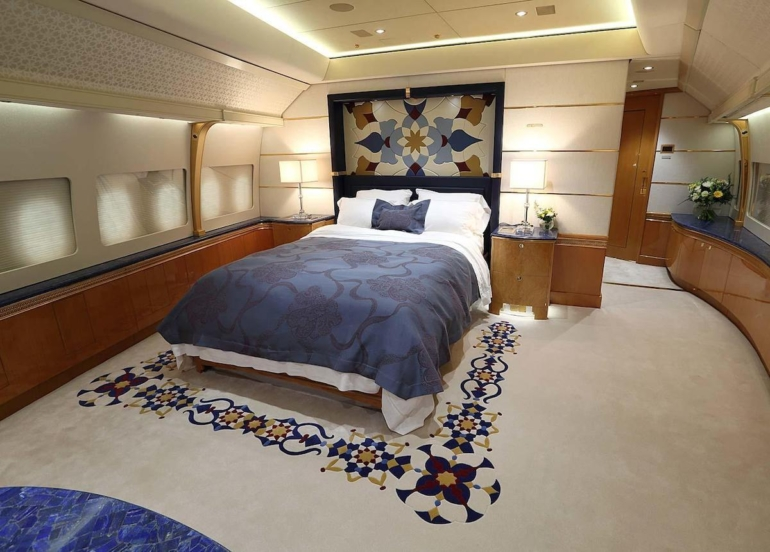
Qatar’s gifted 747 is the epitome of luxury. (Image – Sam Chui)
Following the transfer, the aircraft was modified by AMAC Aerospace and L3Harris, preparing it for potential deployment as an alternate Air Force One. Beyond its opulence, it now stands as one of the most technologically advanced aircraft in any government fleet. Its integration of the NFS system means the jet isn’t just elegant—it’s intelligent, secure, and future-ready. Should it one day carry the U.S. president, it will do so with systems that reflect the cutting edge of both aerospace engineering and diplomatic utility.

Beside a Phenom 3000, the Qatar Amiri 747-8 reveals its massive scale. (Image – X / @diecastryan)
In a world where even flagship commercial airliners remain tethered to outdated update methods, the Qatar-donated 747-8 sets a new standard. It exemplifies a moment where technical innovation meets symbolic power, and where the future of aviation is measured not just in knots or nautical miles—but in the silent efficiency of a secure, wireless upload.