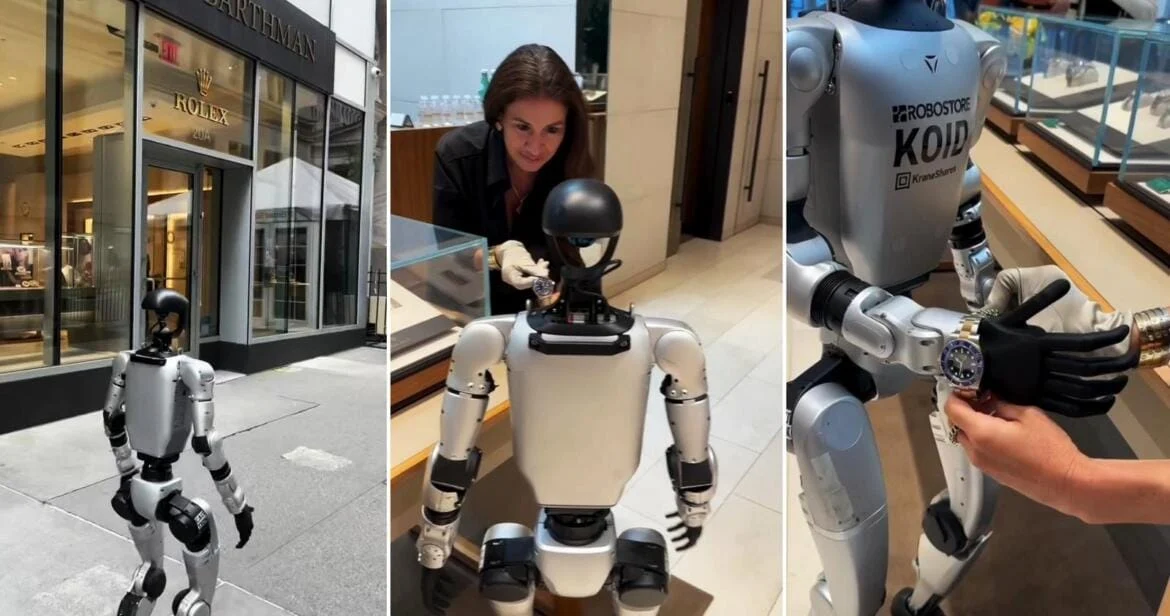
The Fifth Avenue Scene That Stopped Traffic
It was a humid afternoon in Manhattan when the sidewalks of Fifth Avenue, usually filled with luxury shoppers and tourists, made room for a far more curious figure. Standing just under six feet tall and gleaming in silver toned plating, KOID, a humanoid robot developed in China, walked briskly past the Cartier windows, moved beyond the velvet ropes, and stopped in front of the Rolex boutique. With cameras rolling and passersby staring, it waved with a mechanical yet strangely courteous gesture and announced its intention. It wanted to try on a GMT Master II.
What looked like a scene from a science fiction film was actually a carefully planned promotional stunt by KraneShares, a New York based asset management firm. The robot was sent to promote the firm’s Global Humanoid and Embodied Intelligence Index ETF, a financial product that tracks companies involved in advanced robotics. Yet the spectacle reached beyond finance. The sight of a robot confidently entering one of the world’s most exclusive watch boutiques quickly became a flashpoint for questions about technology, identity, and luxury.
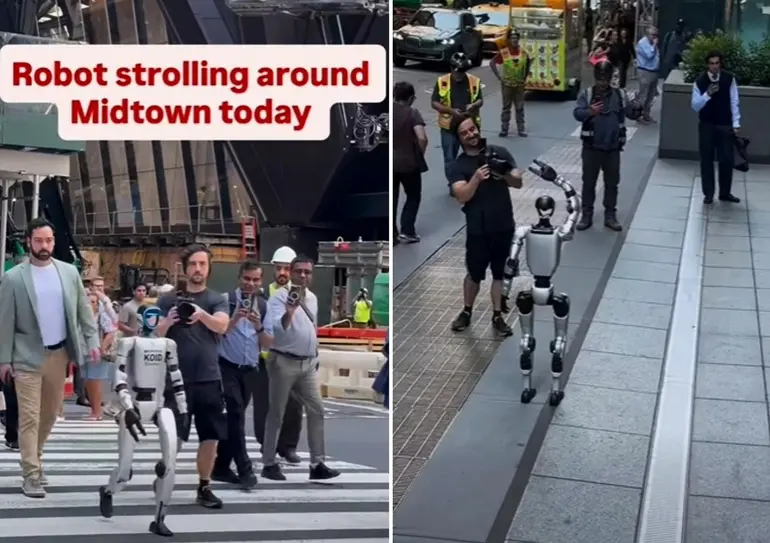
Onlookers did not just notice. They raised their phones. Within hours, clips of KOID walking past doormen and moving with lifelike precision spread across Instagram and TikTok. The robot, reportedly valued at about one hundred thousand dollars, was both spectacle and symbol. In a city where status often walks on leather soles and wears Swiss steel, this visitor had no heartbeat and no credit score, yet it was treated like an honored guest.
When Tradition Meets Tomorrow
Inside the boutique, the moment carried a different kind of weight. Rolex has long stood for more than affluence. It represents discipline, patience, and human aspiration. Waiting lists for coveted models can stretch for years. Sales appointments are timed with care. For many buyers, the experience of purchasing a Rolex is as much about the journey as the watch itself. And now a humanoid stood scanning the display case, cutting to the core of the luxury ritual.
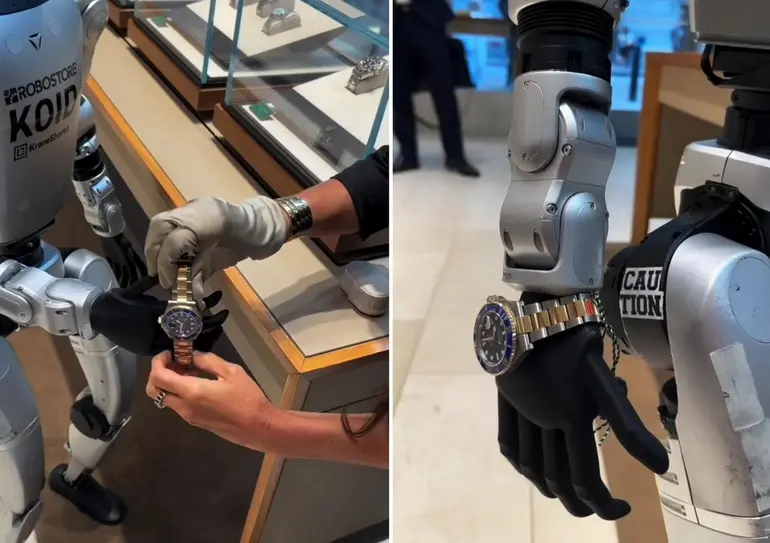
For the staff, who are trained to serve discerning collectors, the presence of KOID felt both surreal and strangely routine. The robot gestured toward the GMT Master II, a stainless steel icon that signals achievement and global mobility. Staff members responded with professionalism, though a thread of disbelief remained. What does client service mean when the client is an artificial intelligence. What does exclusivity look like when the customer has no soul.
This was not simply a tech demonstration. It was a moment rich with metaphor. Joseph Dube, head of marketing at KraneShares, later said that reactions were mixed. Some people were fascinated and others were afraid. While the goal was to create attention for a new investment product, the result was more philosophical. If luxury once defined success in a human society, what happens when machines redraw the boundaries of that society.
Reactions on the Sidewalk and the Questions They Raised
Outside the boutique, reactions ranged from bemused to existential. One bystander shouted, “Satan, I rebuke you to hell,” and the clip bounced across social media as commentary, satire, and sincere discomfort. Another asked, “How much am I getting paid, and how much is the robot getting paid.” Beneath the jokes sat a genuine unease. The world is already struggling with automation at work, facial recognition in public spaces, and artificial intelligence in creative fields. The visit from KOID felt less like novelty and more like a provocation.
Humor softened the shock, yet the symbolism stayed sharp. For generations, Rolex boutiques have been temples of personal reward, places where hard work is translated into status made of polished metal. A robot entering that space was not only absurd. It was disruptive. It raised the question of what luxury means when exclusivity is no longer about human experience but simple access, no matter who or what walks through the door.
Perhaps that was the most haunting part of the stunt. KOID did not only try on a watch. It tried on one of humanity’s most familiar expressions of self worth. It left the boutique without a receipt, yet it left a lasting impression. The future of status, much like the future of technology, may not always be as human as many expect or hope it to be.