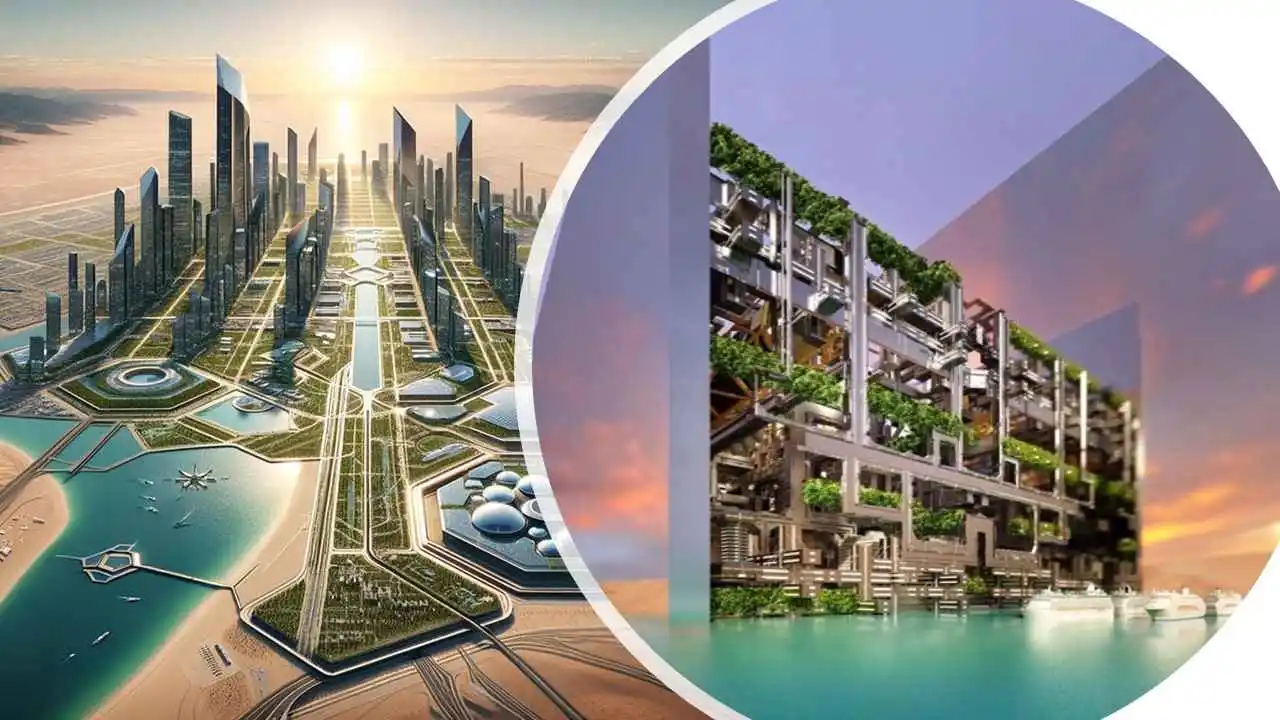
A Vision Scaled Back
When Saudi Crown Prince Mohammed bin Salman first unveiled Neom in 2017, it was pitched as a $1.5 trillion urban utopia, a futuristic city stretching across the Red Sea coast, designed to house nine million people and redefine the Kingdom’s economic identity beyond oil. Seven years on, the picture has shifted sharply. In its 2024 annual report, the Public Investment Fund (PIF) disclosed an $8 billion write-down across several flagship projects, with Neom among the most affected. The revision marks one of the largest course corrections in the PIF’s recent history, signaling a recalibration of expectations.
The valuation of gigaprojects on PIF’s books fell to 211 billion riyals ($56.24 billion) at the close of 2024, over 12 percent lower than the previous year’s 241 billion riyals. Behind these numbers lie a web of cost overruns, construction delays, and changing market conditions. Neom’s most ambitious component, The Line, once planned as a 170-kilometer linear city, has been pared back to a mere 2.4 kilometers in initial scope. Such contractions suggest a new pragmatism replacing the earlier sweeping vision, as the realities of timelines, budgets, and technical feasibility take hold.
This recalibration does not erase the project’s symbolic weight within Vision 2030, but it does reshape its trajectory. Downsizing components and extending deadlines may help align Neom’s development with Saudi Arabia’s broader fiscal priorities. While the early rhetoric promised a breakneck transformation, the present approach seems designed to preserve the core vision while avoiding overreach, especially in an era of fluctuating oil revenues and mounting external commitments.
Between Global Ambition and Domestic Realities
The latest retrenchment follows a series of high-profile cost-control measures. Hundreds of Neom staff have been laid off, with more than 1,000 employees relocated to reduce operating expenses. While these moves are significant, they are not isolated. Across the Kingdom’s broader development landscape, resource allocation is increasingly being shaped by global events that demand attention and funding. Saudi Arabia has secured the hosting rights to major international competitions, including the 2034 FIFA World Cup and the 2029 Asian Winter Games, each requiring billions in infrastructure investment.
Economists argue that a more targeted investment strategy could benefit the Kingdom in the long run. Monica Malik, Chief Economist at Abu Dhabi Commercial Bank, notes that longer project timelines and selective prioritization may actually prove positive, especially given weaker oil revenues and the capital-intensive nature of large-scale events. These sporting showcases offer international visibility, but they also compete for resources with the Kingdom’s transformative urban visions. In this context, scaling back certain elements of Neom may be less a retreat than a strategic redeployment of funds.
This balancing act reveals the evolving priorities of Vision 2030. Initially conceived as a single, sweeping push towards diversification, the plan is now being adapted to accommodate multiple concurrent ambitions. From tourism hubs and cultural destinations to global sporting arenas, the Kingdom’s development agenda is widening in scope, forcing even its flagship project to share the stage and the budget.
Trojena, Sindalah, and the Price of Prestige
Not all of Neom’s components have been slowed. Trojena, the year-round mountain resort slated to host the 2029 Asian Winter Games, continues to advance, although at a rising cost. Internal documents indicate that its budget has doubled over two years, reaching $38 billion as of October 2024. Despite the expense, Trojena has secured marquee hotel brands, including Saudi Arabia’s first W Hotel, a JW Marriott, and Chedi Trojena, underscoring the project’s luxury positioning.
Similarly, Sindalah, the Red Sea island resort that recently opened its doors, has begun operations but with a muted reception. These ventures, though costly, serve as early showcases of Neom’s ambition, offering tangible glimpses of the brand’s promised fusion of futuristic design and premium tourism. Yet their progress also illustrates the tension between delivering on grand promises and sustaining the financial discipline now shaping the Kingdom’s project portfolio.
Ultimately, the $8 billion write-down does not mark the end of Neom’s story. It instead closes its earliest and most expansive chapter. In its place emerges a leaner, more incremental strategy that seeks to preserve prestige projects like Trojena while trimming the most speculative elements. Whether this recalibrated approach will fulfill the original promise of reshaping Saudi Arabia’s economy remains an open question, but it is clear that the road to Vision 2030 is proving more winding than once imagined.