
A Billionaire at the Front Lines of Fashion Tech
While Mark Zuckerberg has earned acclaim as the husband of the century, another Silicon Valley figure is now being celebrated in a different role. Bill Gates, the co-founder of Microsoft and one of the wealthiest individuals on the planet with a net worth of approximately $122 billion, has stepped into a new light as the “dad of the decade.” Known for building a software empire that reshaped modern life, Gates left Microsoft’s board in 2020 after more than three decades of leadership. His return to the rhythms of a workday was not for a tech conglomerate, but for his youngest daughter’s entrepreneurial venture.
Phoebe Gates, at just 23 years old, co-founded Phia, a forward-looking fashion platform built to merge accessibility with innovation. For a day, her father took on the most unglamorous but essential role in any startup: customer support. The same man who has amassed over $60 billion in Microsoft stock and dividends volunteered to troubleshoot inquiries and answer questions, proving that no task is beneath true leadership. Gates himself remarked with humor, “When your daughter asks if you’ll work a customer-support shift, the only right answer is yes,” before adding a self-deprecating aside: “hopefully I won’t break anything.”
The gesture captured the imagination of both the tech and fashion communities. To see Gates at 69 years old stepping into an entry-level position at his daughter’s company resonated as more than a parental favor. It underscored a philosophy of accessible leadership and reinforced that even the most established figures can find value in learning from the ground up. By clocking in for his daughter’s team, Gates transformed an ordinary work shift into an emblem of humility, devotion, and vision.
Phia’s Mission and Gates’s Hands-On Support
Phia, the company at the center of this moment, is not simply another app in a crowded digital marketplace. It is a hybrid of fashion and technology, offering a free iOS app and Chrome tool designed to streamline decision-making for shoppers. With its signature “Should I Buy This?” button, Phia compares listings across more than 40,000 sites and combs through a database of 250 million resale items in real time. For a generation of digital-first consumers, it answers the essential question of value and authenticity with precision.
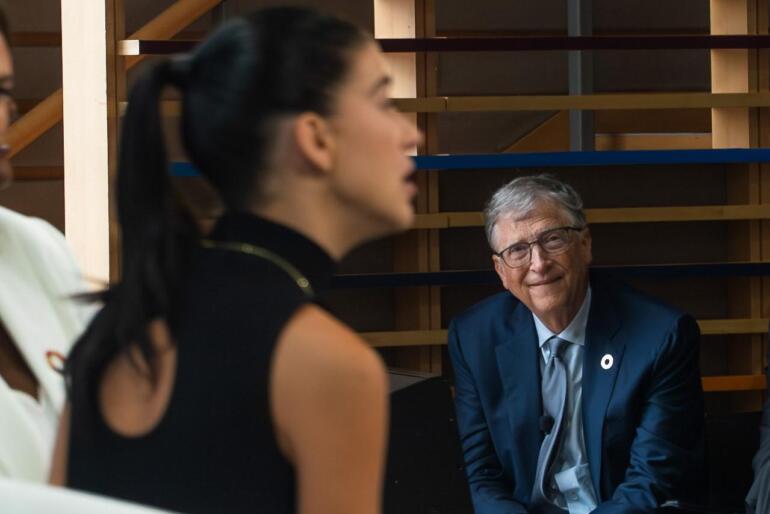
When Bill Gates joined for a day, he was not stepping into the operations of a multinational call center. He was immersing himself in the fragile early stage of a startup where direct access to users is essential. His contributions were practical as well as symbolic: answering customer queries, reviewing feedback, and even cautioning his followers to “be nice if you see my name pop up.” This was leadership expressed not through boardroom directives, but through firsthand engagement with the company’s core audience.
Phia’s founding team, comprised of Phoebe Gates and her co-founder Sophia Kianni, a climate advocate and Stanford peer, leveraged this moment not only for visibility but also for credibility. Gates’s presence validated the principle that even the most disruptive innovations must begin with users at the center. By choosing to serve on the front lines, he demonstrated a principle many founders learn the hard way: the pathway to scale is paved by listening, one customer at a time.
The Halo Effect of a Father’s Commitment
The impact of Bill Gates’s participation extended far beyond a single customer-support shift. With his iconic stature and global reach, the association brought Phia a level of visibility that marketing budgets could scarcely replicate. The story of a billionaire stepping into his daughter’s world became a cultural moment in its own right, capturing headlines and social media conversations. The halo effect proved invaluable, not because of financial investment, but because of the narrative it created around independence and resilience.
What made this gesture even more powerful was Gates’s decision not to fund Phoebe’s startup directly. Instead, he modeled a philosophy that has long defined his approach to parenting: encouraging independence through education, effort, and lived experience. By declining to contribute capital, he gave his daughter the space to build her vision without the safety net of inherited privilege. What he did contribute was arguably greater: his time, his reputation, and his visible endorsement of her leadership.
This ethos of engaged fatherhood has deep roots in Gates’s personal life. Even during his years as Microsoft’s CEO, he prioritized involvement in his children’s daily routines. Famously, he drove his eldest daughter Jennifer to kindergarten several mornings a week, a 40-minute commute that signaled his belief that presence matters as much as resources. That example once inspired mothers to tell their husbands, “If Bill Gates can, so can you.” Today, with Phoebe at the helm of her own venture, he has updated that same philosophy for a new chapter, showing that the measure of success is not wealth alone, but the values one imparts.
A Playful Gesture with Lasting Symbolism
The collaboration between Bill Gates and Sophia Kianni culminated in a moment that merged humor with cultural resonance. Together, they produced a playful Instagram video that featured the tech titan in a Kardashian-style voiceover, gently poking fun at Phoebe’s fierce entrepreneurial drive. The billionaire, often reserved in demeanor, leaned into the theatrics of modern startup culture, showing both affection for his daughter and adaptability to her world.
For Phia, this moment of levity doubled as a masterstroke in branding. It connected the startup to the viral energy of digital culture while retaining the credibility of Gates’s legacy. The juxtaposition of a billionaire patriarch and a Gen Z founder created a narrative that appealed across generations, drawing attention from fashion enthusiasts, tech observers, and everyday followers alike. It was a campaign that money could not buy, delivered through authenticity and familial warmth.
Ultimately, this episode reinforced Bill Gates’s reputation not just as a builder of companies, but as a builder of values. By placing himself in the orbit of his daughter’s ambitions without overshadowing them, he exemplified the evolving role of parenthood in the context of modern entrepreneurship. The billionaire who once revolutionized personal computing has now modeled what it means to revolutionize personal commitment. If any man deserves the title of “dad of the decade,” it is surely Bill Gates.