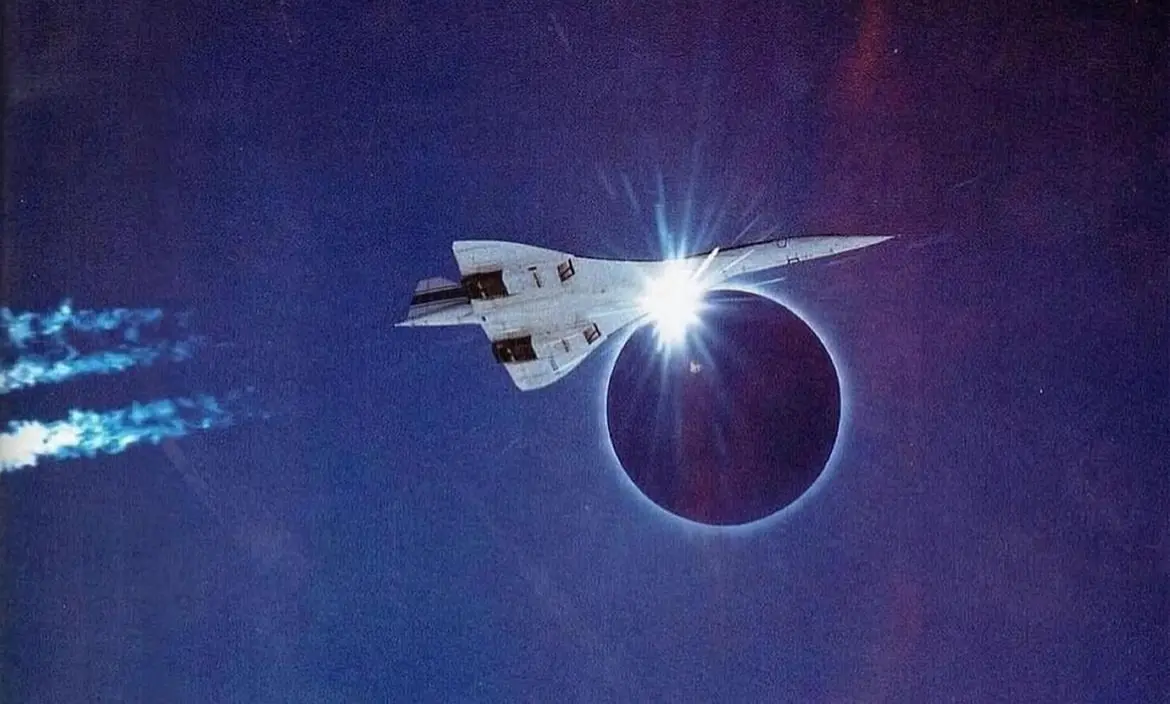
A Supersonic Pursuit of Darkness
On June 30, 1973, a supersonic jet cut across the African sky at 58,000 feet, traveling at 1,450 miles per hour in pursuit of the Moon’s fleeting shadow. Inside Concorde 001, seven scientists prepared for a cosmic experiment unlike anything attempted before. Their mission was to transform what is usually seven minutes of total solar eclipse into more than an hour of continuous observation.
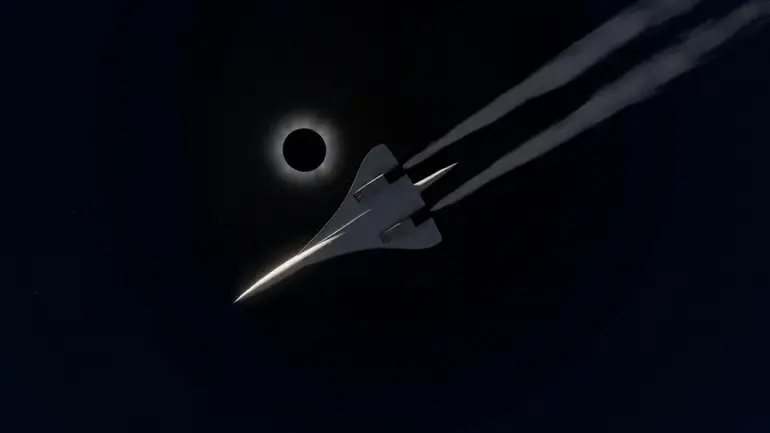
The concept was both audacious and elegant. Under the leadership of test pilot André Turcat and astrophysicist Pierre Léna, the plan was to launch from the Canary Islands, intercept the eclipse over Mauritania, and pursue it across 2,500 miles of the Sahara before landing in Chad. Matching the Moon’s shadow required flying at a speed of 2,100 kilometers per hour while staying precisely aligned on the eclipse centerline. One error in timing or navigation would have rendered the mission impossible.
Mauritania cleared its airspace entirely for the passage of the jet. At Mach 2.2, Concorde became not just a prototype of luxury travel but a high-altitude observatory. The challenge was immense, and the margin for error was measured in seconds. Yet when the shadow fell, the aircraft entered a realm of darkness few had ever experienced, turning the impossible into one of the most extraordinary scientific flights in history.
A Flying Observatory in the Sky
To achieve this feat, engineers stripped Concorde 001 of its refined interior and replaced it with a laboratory of extraordinary ambition. Quartz windows were cut into the roof, and the cabin was filled with instruments mounted on anti-vibration frames. What had been conceived as an aircraft for speed and style now became a vessel of discovery, transformed into the most advanced airborne observatory of its time.
The scientific payload read like a manifesto for eclipse astronomy. A Queen Mary College interferometer tracked the Sun through the specially cut roof windows, while Michelson interferometers recorded sub-millimeter wavelengths. Photometers searched for infrared emissions from cosmic dust, and side-mounted detectors measured oxygen levels in the upper atmosphere. Every device had to function with absolute precision at supersonic speed and altitude.
At the appointed moment, the Moon’s shadow engulfed the aircraft, and the Sahara disappeared beneath a cloak of twilight. For seventy-four minutes, the scientists conducted experiments never before possible, detecting oscillations in the solar corona, measuring thermal emissions from interplanetary dust, and capturing light variations invisible from the ground. Concorde’s velocity and altitude had created a sanctuary for pure observation, redefining the boundaries of eclipse science.
The Legacy of an Unbroken Record
The physics behind the mission were as brutal as they were beautiful. On the ground, the shadow of the Moon races at more than 1,300 miles per hour, giving observers no more than seven minutes of totality. Yet at 58,000 feet and traveling at Mach 2.2, Concorde could not only keep pace with the shadow but effectively outrun it. For as long as fuel lasted, the scientists on board remained suspended in night, the Sun’s corona shimmering above them.
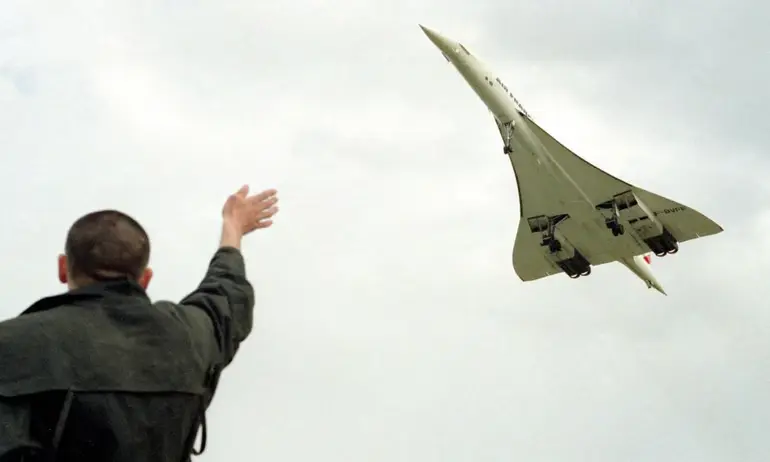
The success of this airborne observatory directly inspired NASA’s later eclipse-chasing programs. High-altitude aircraft such as the WB-57F have since extended eclipses to eight or nine minutes, while research jets and passenger flights have offered glimpses of extended totality. None, however, have approached the seventy-four minutes achieved that day over Africa. The Concorde’s unique combination of speed, altitude, and endurance has ensured the record remains intact.
Though remembered for carrying royalty, executives, and celebrities across the Atlantic, Concorde’s role in 1973 revealed another dimension to its legacy. It was not merely a vessel of prestige but a tool of ambition, capable of reshaping scientific possibility. With the last Concorde retired in 2003, and new supersonic projects still in development, the achievement of June 1973 endures as both a singular triumph of engineering and a reminder of what happens when human curiosity dares to chase the limits of nature itself.