The Final Departure
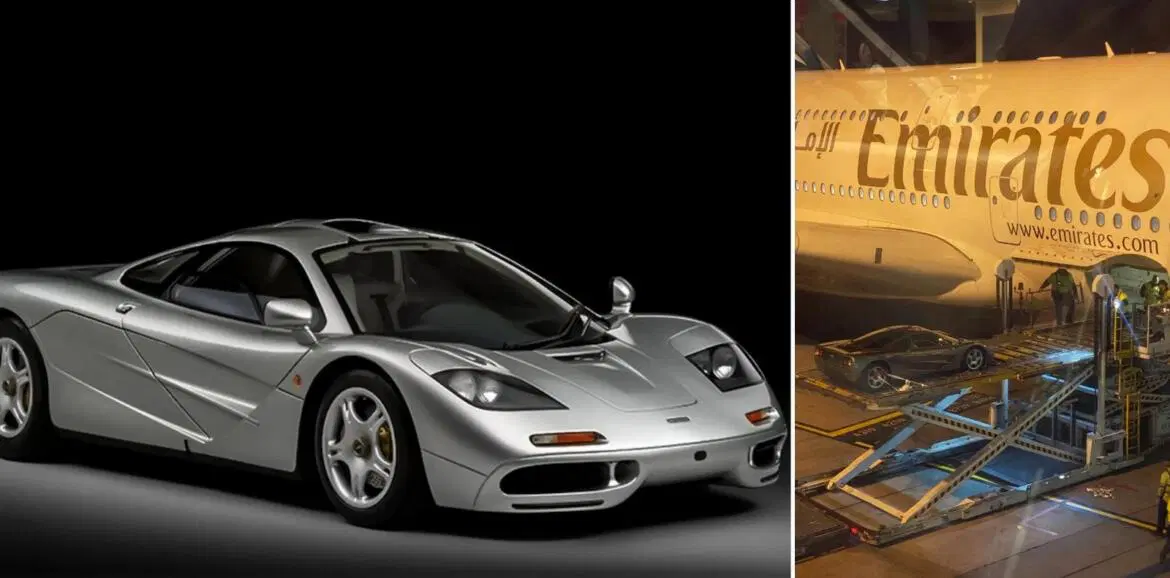
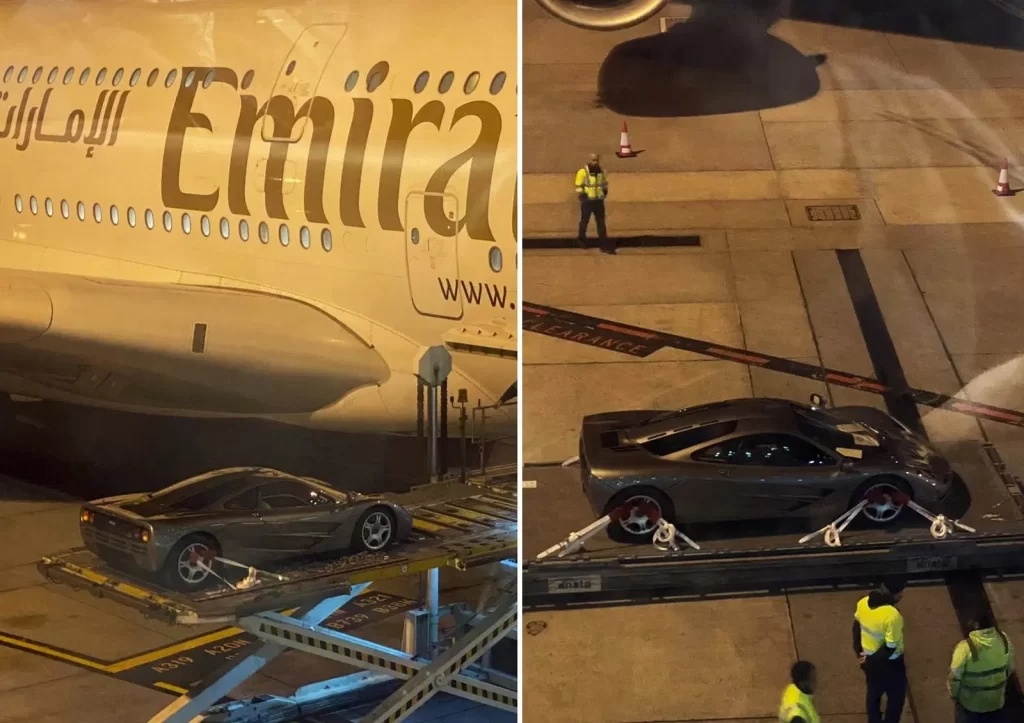
For nearly three decades, Australia laid claim to one of the rarest and most celebrated cars ever built: the McLaren F1. Known by enthusiasts worldwide as chassis 009, the car was recently seen being carefully loaded onto an Emirates aircraft at Sydney Airport, bound for Britain and a new chapter in its life. The $24 million supercar’s departure marks the end of an era, closing the book on a story that has been deeply woven into Australia’s motoring lore.
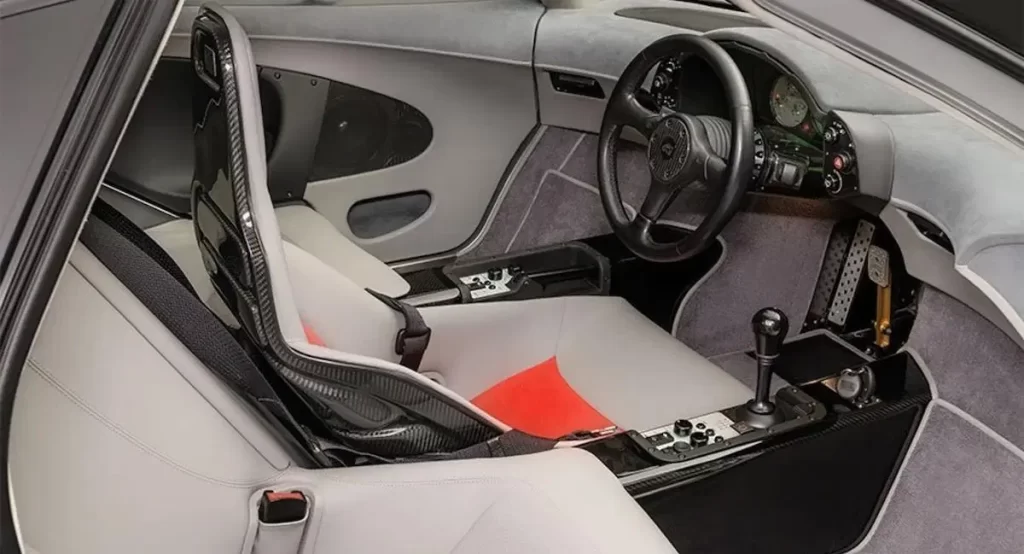
The McLaren F1 is widely considered the definitive modern supercar, a machine that redefined what was possible on both road and track. With only 64 road-going examples ever built, its scarcity has become as legendary as its central driving seat and BMW-sourced 6.1-liter V12 engine. For Australians, the presence of even a single example on local roads was a point of quiet national pride, a reminder that automotive royalty had found a home far from its European birthplace.
Yet as values climbed into the stratosphere, Australia’s difficult luxury car market revealed its limits. Punitive import taxes, a small collector base, and restricted liquidity ultimately left the car without a local buyer willing to meet the valuation. Its sale abroad may make sense financially, but culturally, it feels like the loss of more than just a vehicle. It is the departure of a symbol of engineering excellence that had, for years, captured imaginations every time its doors lifted skyward.
A Storied Life on Southern Roads
The story of chassis 009 began in the 1990s, when Sydney businessman Dean Wills, then the head of Coca-Cola Amatil, took delivery of the car. Unlike many F1s destined to spend their lives in static display, Wills believed in using his. On his private track north of Sydney, he exercised the car’s 627 horsepower V12, bringing to life Gordon Murray’s vision of the F1 as a driver’s car first and foremost. To see the car driven with intent was to understand it as its creators had intended, kinetic sculpture in motion.
Its Australian chapter was not without drama. In 1997, during a routine service, the car was taken on an unauthorized drive by a mechanic and suffered a serious crash. The damage was significant enough that it had to be shipped back to McLaren’s Woking facility for a full rebuild, reportedly costing close to $1 million. It returned in a darker shade of grey than its original Magnesium Silver, its scars repaired but its narrative deepened, now carrying the kind of lore that makes icons even more magnetic.
Subsequent owners added their own layers to its history. In 2006, businessman Barry Fitzgerald became the car’s longest custodian. Unlike many collectors who preserve such machines in climate-controlled silence, Fitzgerald drove it on public roads and even took it on extended tours in New Zealand. Though it endured another incident in 2016, it was again restored by McLaren and returned to duty. In this way, Australia’s McLaren F1 was never just a display piece. It was a living legend, visible in motion and accessible enough to stir awe among enthusiasts lucky enough to encounter it on highways or circuits.
Legacy and Loss in a Global Market
The sale of chassis 009 highlights not only the closing of its Australian story but also the shifting geography of global automotive collecting. With only 106 McLaren F1s ever built, including prototypes and racing variants, values have soared beyond $20 million, placing them among the most coveted cars in existence. Collectors in Europe, the United States, and the Middle East now dominate the market, where deep pockets and established infrastructure make deals of this magnitude more feasible.
Australia’s isolation and economic structure have long challenged the retention of such rarities. Taxes and duties significantly inflate costs, while the small pool of potential buyers makes liquidity scarce. For vehicles of extraordinary value, it becomes increasingly difficult for them to remain onshore. In this sense, the F1’s departure reflects a larger pattern: cultural treasures acquired locally often flow back into the gravitational pull of international markets where capital and competition thrive.
For Australian enthusiasts, the loss is bittersweet. The McLaren F1 was not only a marvel of engineering, with its butterfly doors and central driving position, but also a touchstone, a car that embodied the possibility that history’s greatest automotive achievements could find homes anywhere, even on the far side of the world. Its absence will be felt every time a rare car meet convenes or a racetrack echoes without its signature V12 wail. More than just the sale of a car, its departure marks the closing of a remarkable chapter in Australian motoring culture.