When a Prancing Horse Sails Instead of Gallops
As Ferrari delays the launch of its first fully electric car, citing the need for more time to refine its offering, the company has turned with striking confidence to a different frontier: the open sea. The Italian marque has announced its boldest non-automotive venture to date—a 100-foot, energy-self-sufficient racing yacht set to launch in 2026. It’s called Hypersail, and its unveiling marks a curious pivot, if not a recalibration, of Ferrari’s relationship with sustainable engineering.
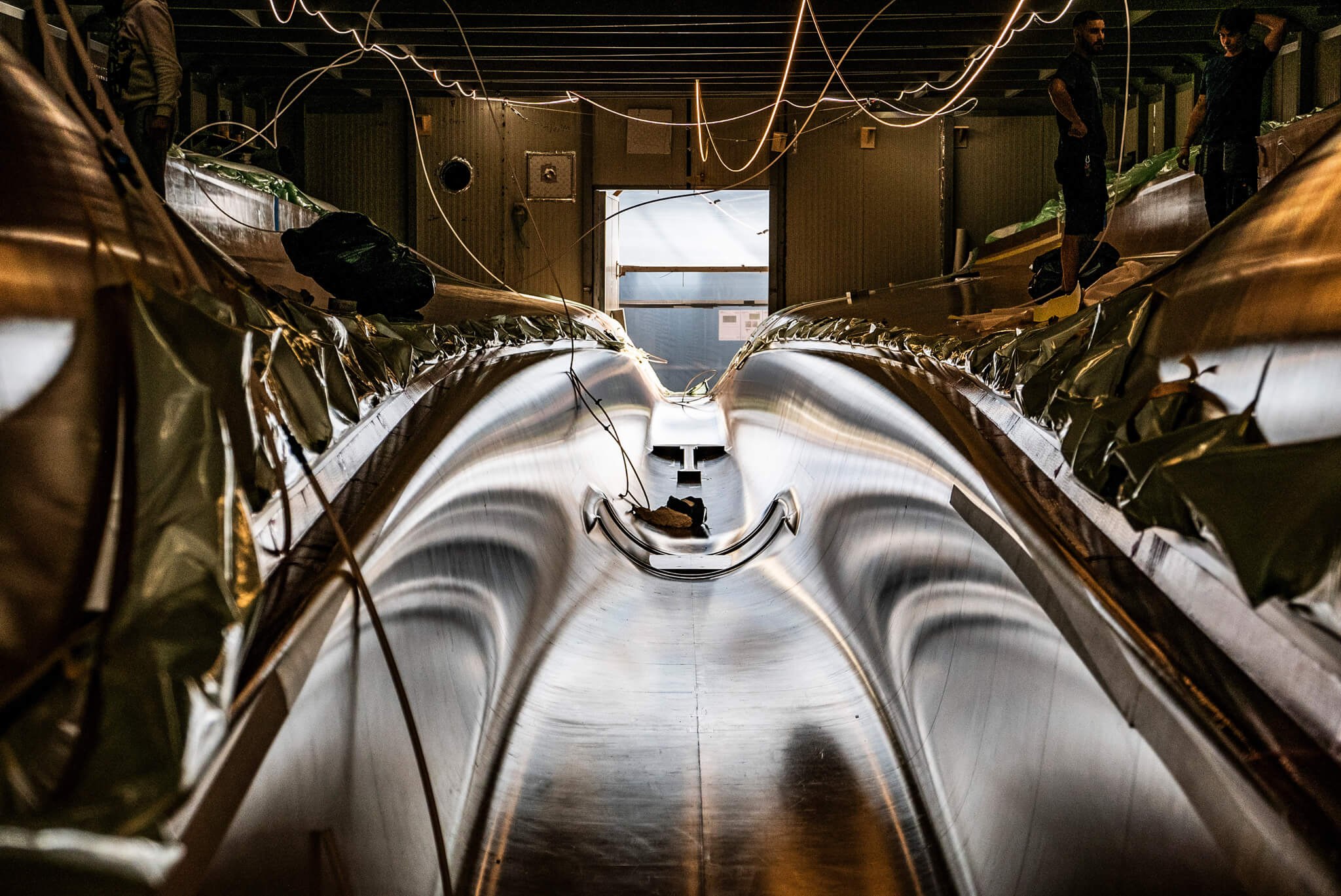
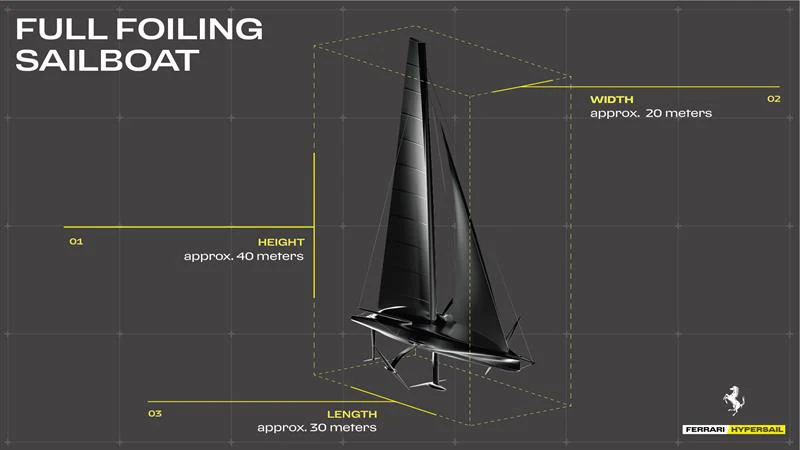
The Hypersail project will produce a 30.5-meter ocean racing monohull capable of operating entirely without fossil fuels. Designed in partnership with celebrated French naval architect Guillaume Verdier and helmed by legendary Italian sailor Giovanni Soldini, the vessel uses a combination of solar, wind, and kinetic energy to achieve total energy autonomy. With construction already underway in Italy, the yacht promises not just innovation in materials and propulsion, but a symbolic statement: that Ferrari’s passion for performance can live outside the roar of combustion engines.
It’s hard to ignore the timing. While Ferrari’s electric vehicle program faces internal hesitations and market scrutiny, the Hypersail announcement arrives with absolute clarity. In contrast to the complexity and branding anxiety surrounding electrified road cars, the yacht allows Ferrari to explore sustainability without compromising its identity. There are no muffled engines here—only clean propulsion, advanced aerodynamics, and the purity of speed over water. The move suggests that the ocean, not the road, may be the company’s most immediate and emotionally safe testing ground for future tech.
A Vessel of Innovation, A Mirror to Ferrari’s Strategy
From a technical standpoint, the Hypersail yacht appears to be a distillation of everything Ferrari values—only reimagined. The three-point foiling system, complete with a canting keel that shifts dynamically with water conditions, speaks to a mastery of balance, lift, and load—all concepts drawn from Ferrari’s decades-long pursuit of performance perfection. The yacht’s design is focused not just on aesthetics or endurance, but on creating a vessel that glides above the water with the same elegance a Ferrari commands on the tarmac.
What’s more revealing is how the project is being executed. Unlike the more conservative, siloed approach Ferrari has taken with its electric vehicles, the Hypersail initiative is collaborative by design. The team includes aerospace engineers, marine energy specialists, and Formula One veterans—all contributing to a vessel that prioritizes modular power systems, kinetic energy recovery, and aerodynamic efficiency. So far, Ferrari has filed nine patents related to the project, with six more in the pipeline, signaling a pace and scope of innovation unmatched in their automotive electrification efforts.
This contrast is telling. Where the EV project is a cautious adaptation, the Hypersail is a confident experiment. Rather than replicate the predictable structure of the electric car market, Ferrari is building its own lane—one that navigates performance, exclusivity, and sustainability in equal measure. If the yacht succeeds, it may serve not just as proof of concept for marine mobility, but as a strategic laboratory for technologies that could eventually influence the brand’s more hesitant automotive path.
Sailing Toward Sustainability on Ferrari’s Terms
For all its beauty and technical complexity, the Hypersail project is, at its core, a strategic act. It offers Ferrari a chance to enter the sustainability dialogue from a position of strength rather than compromise. The EV market is crowded, governed by regulatory timelines and shifting consumer expectations. The open ocean, however, is unclaimed territory—a space where Ferrari can apply its identity to clean energy without being forced into sameness. In this sense, Hypersail becomes not just a product, but a narrative reset.
The yacht’s energy management system—capable of integrating solar arrays, wind turbines, and hydro generators into a seamless control architecture—is as much about environmental ambition as it is about performance optimization. There’s no engine growl, no gearshift drama. But what it offers is equally potent: control through silence, speed through lift, and a promise that technology and emotion can coexist in sustainable luxury. That’s a narrative Ferrari has yet to crack on land—but at sea, they’re already writing the first chapters.
Of course, success is not guaranteed. Whether Hypersail will lead to meaningful breakthroughs in automotive electrification remains uncertain. But what Ferrari seems to be testing isn’t just hydrofoil dynamics—it’s a broader hypothesis about how to preserve the soul of performance in a world that’s demanding cleaner, quieter motion. And perhaps that’s why this racing yacht matters. Because it suggests that the most effective way to move forward might not always be on wheels—it might be by lifting off the water and gliding toward a future built entirely from new ambitions.