A Floating Palace of Order
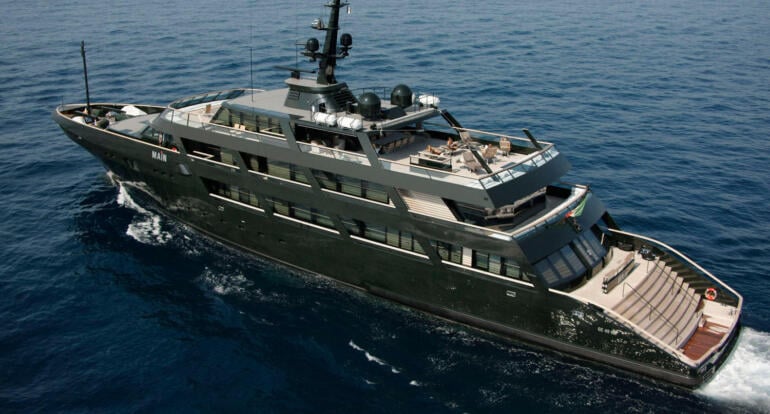
On most yachts, shutters are a design flourish, functional yet secondary. On Giorgio Armani’s 213-foot superyacht Maìn, they became the centerpiece of a daily ritual. Built in 2008 by Codecasa at a cost of approximately $60 million, Maìn was clad in military green steel, her interiors finished exclusively with Armani Casa furniture. More than a vessel, she embodied the late designer’s philosophy that order was the foundation of elegance. Armani, who once declared, “I fear chaos and unruliness,” translated his conviction into every aspect of the yacht’s design.

His sensitivity to light defined life on board. Armani’s eyes were famously intolerant of strong sunlight, and on the open waters, glare could transform the beauty of the sea into a source of discomfort. Rather than accept this as inevitable, Armani devised a solution that elevated necessity into theater. He trained his crew to anticipate his movements, ensuring that as he walked barefoot in his signature navy top and trousers, sunlight never reached him unfiltered.
This meticulous choreography was never indulgence for its own sake. It reflected Armani’s belief that true freedom emerges from structure. On Maìn, precision ruled, and even light was subject to discipline. The daily act of managing shutters and blinds was not a task of servitude but an extension of Armani’s artistry, an orchestration that demonstrated his ability to mold environment to vision.
The Choreography of Shadows
Armani’s intolerance of glare shaped Maìn in ways both practical and symbolic. The crew, uniformed and discreet, acted almost as stagehands, flipping specialized mechanical shutters and rigging black net blinds as he moved. Their synchronized precision created an atmosphere where light was softened, filtered, and controlled, transforming the yacht into a sanctuary of calm. The act resembled performance, a silent ballet in which the designer himself was both audience and inspiration.
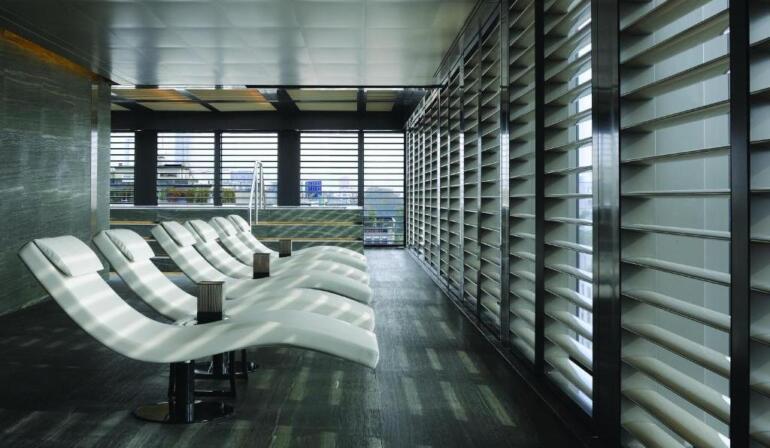
These shutters transcended function to become part of Armani’s design language. Their futuristic lines inspired architectural features at the Armani Hotel in Milan, where similar panels echo the yacht’s language of control and restraint. What began as a personal accommodation evolved into a signature motif that bridged fashion, hospitality, and architecture. In this way, the yacht became a living laboratory, a place where Armani’s philosophy extended across industries.
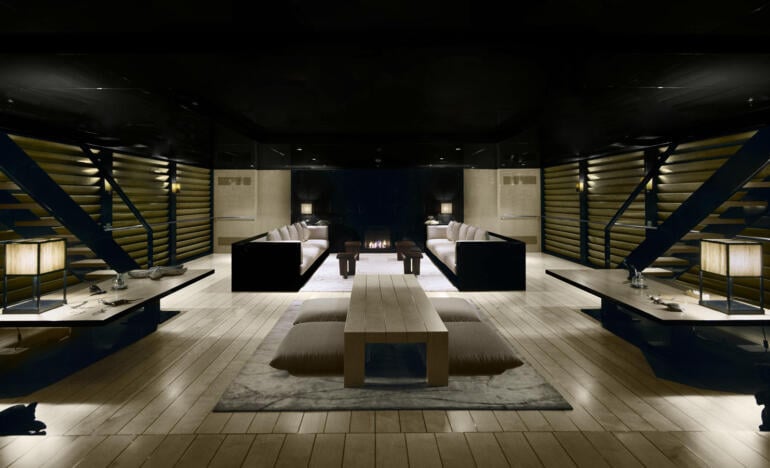
For Armani, the mastery of light was as important as tailoring a garment. In interviews, he criticized traditional charter yachts as excessive, with “too much white, too much lighting, too much marble and crystal and mahogany.” Maìn offered the antithesis: darker palettes, satin-lacquered finishes, and Venetian blinds that tamed reflections. Every detail spoke of a desire to sculpt atmosphere with the same precision he brought to fabric on a runway.
Maìn as a Vessel of Legacy
The technical brilliance of Maìn extended far beyond its treatment of light. With accommodations for 12 guests across six cabins, the yacht combined opulence with restraint. The main deck housed a cinema, spa pool, and indoor gym, while a vast sundeck provided expansive views of the sea. Inside, the living area blended a lounge with a fireplace, and the owner’s suite was flanked by marble bathrooms, antique Japanese furnishings, and rare paneling. The effect was one of understated grandeur, a space where luxury never veered into excess.
Every surface bore Armani’s personal imprint. The galley featured stained retro-lacquered glass, while the lounges were lined with custom-designed sofas and stools. Even the tender garage and spa areas reflected his philosophy of disciplined beauty. The yacht was less a display of wealth than an intimate expression of Armani’s vision, an environment curated to embody harmony and control.
The very name Maìn carried deep resonance. It was the childhood nickname of Armani’s mother Maria, a personal homage that anchored the yacht in memory and affection. This detail reflected Armani’s ability to merge intimacy with grandeur, ensuring that the vessel was never just a showpiece. Guests stepping aboard entered a world without shoes, rings, or clutter, a sanctuary of precision where even the smallest element contributed to an atmosphere of quiet refinement.