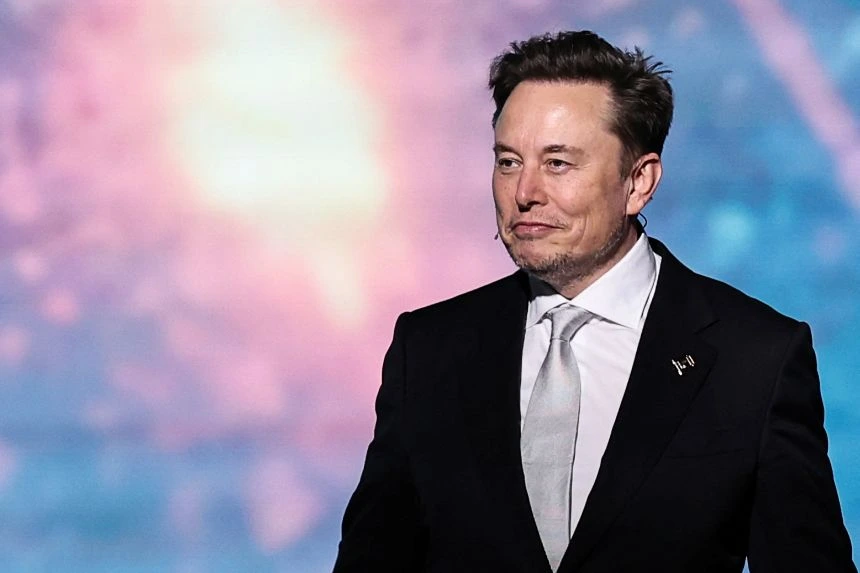
Elon Musk has accused Apple of violating antitrust laws by favoring OpenAI’s ChatGPT over competing AI chatbots, including his own product, Grok. In a series of posts on X, formerly known as Twitter, Musk claimed Apple’s App Store practices prevent other AI tools from achieving top placement, calling the situation “an unequivocal antitrust violation.” He also stated that his AI company, xAI, would take “immediate legal action” against the iPhone maker.
Allegations of App Store Bias
Musk’s comments on Monday night targeted Apple’s “Must-Have Apps” section, which prominently features ChatGPT but excludes Grok. “Why do you refuse to put either X or Grok in your ‘Must Have’ section when X is the number one news app in the world and Grok is number five among all apps?” he wrote. Musk also questioned why ChatGPT appears “in every list where you have editorial control.”
A review by technology outlet Gizmodo found that ChatGPT is currently the number one free app on the U.S. iOS App Store and the only AI chatbot listed in Apple’s curated “Must-Have Apps.” Apple’s promotional positioning of ChatGPT comes after a June 2024 partnership with OpenAI to integrate the chatbot into Siri and other system-wide tools on iPhones, iPads, and Macs. This integration has given ChatGPT a significant visibility advantage, reaching hundreds of millions of Apple device users.
Musk co-founded OpenAI in 2015 but left the organization in 2018 after internal disagreements. Since then, he has been an outspoken critic of the company, frequently challenging its direction and business practices. His AI startup, xAI, launched Grok in late 2023 as an alternative to mainstream chatbots and integrated it directly into the X platform.
A Potential New Antitrust Fight
Musk’s threat to sue Apple mirrors broader concerns that have been raised about the company’s control over its App Store. Apple has faced years of legal challenges and regulatory investigations, including a high-profile lawsuit from game developer Epic Games, over allegations that its app marketplace policies create an illegal monopoly.
By framing his complaint in antitrust terms, Musk is extending these arguments into the AI sector. His central claim is that Apple’s editorial promotion can heavily influence which apps succeed and which remain obscure. For smaller AI companies, the absence of such promotion could mean a significant competitive disadvantage.
In Musk’s view, Apple’s collaboration with OpenAI creates a conflict of interest when it comes to featuring apps. While Apple has not publicly responded to Musk’s latest accusations, the company has consistently defended its App Store curation process as being based on quality, safety, and user interest rather than commercial partnerships.
Industry and Regulatory Implications
If Musk follows through with legal action, it could open a new front in the ongoing global debate over the power of large technology platforms. Regulators in both the United States and the European Union are already investigating potential anti-competitive behaviors in the AI market, including preferential treatment and exclusive agreements between major tech firms and AI developers.
The Apple-OpenAI partnership has drawn particular attention because it embeds ChatGPT directly into the operating system of Apple devices. This level of integration could make it difficult for alternative AI tools to gain similar user reach without comparable platform support. Musk’s Grok, despite ranking among the top apps in its category, has yet to secure such positioning.
The dispute also underscores growing competition among AI companies seeking prominence in consumer markets. As more AI chatbots enter the space, visibility in app stores and platform integrations will likely play a critical role in determining market leaders. Whether Musk’s challenge results in legal consequences for Apple remains to be seen, but it adds another layer to his ongoing disputes with both established tech giants and his former OpenAI colleagues.