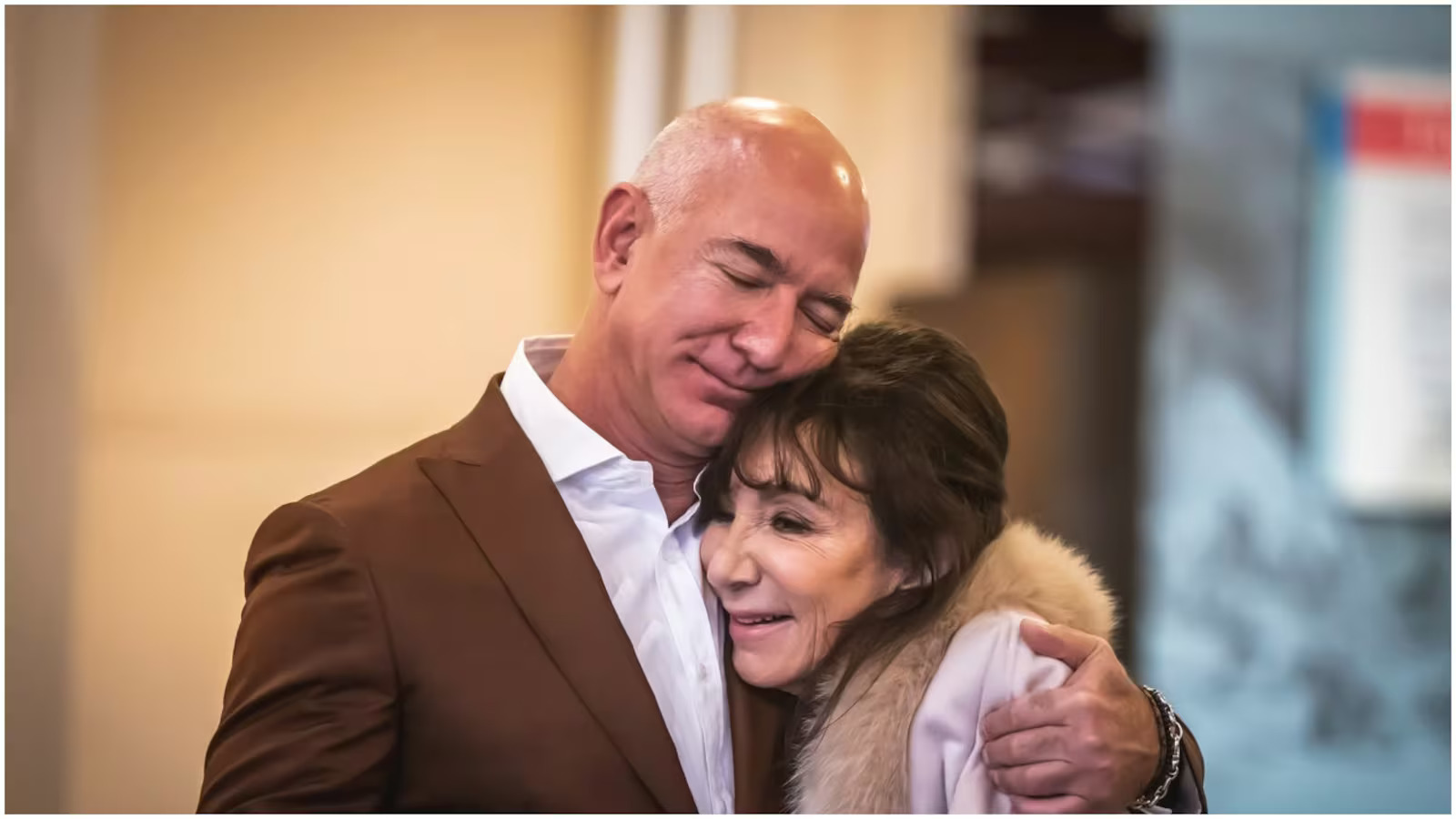
Origins of a Tech Empire, Forged by Two
Long before the yachts, headlines, and orbital ambitions, Jeff Bezos was a thirty-year-old senior vice president at the Wall Street hedge fund D.E. Shaw, on a traditional path lined with predictable success. But behind the glossy title lay a restless imagination—a desire to build, to invent, to shape something entirely new. The mid-1990s internet boom offered that window, and Bezos found himself standing on the edge of a risky idea: an online bookstore, which he believed could scale with the growing reach of the web. Yet even he hesitated, unsure if it was worth leaving a lucrative, stable position to chase an unproven dream.
The defining moment came not with a pitch deck or a prototype, but in a deeply personal conversation with his then-wife, MacKenzie Scott. Just a year into their marriage, Bezos told her about his plan to quit his job and launch the startup that would eventually become Amazon. In interviews, he has described her response not as reluctant acceptance, but as unwavering support. Where others—including his boss at D.E. Shaw—urged caution, Scott recognized in her husband a lifelong inventor who needed to follow his curiosity, even if it led to failure.
Their story, often lost in Bezos’s towering post-divorce profile, is one of mutual trust and early resilience. Scott wasn’t a passive partner cheering from the sidelines; she became one of Amazon’s first employees. She helped write the company’s initial business plan, brainstormed names, and even packed orders in their Seattle garage. The scale of Amazon’s ambition may have been Bezos’s, but the structure that allowed it to grow—steady support, shared labor, and emotional belief—was theirs. Before the numbers ever made headlines, their partnership was the quiet scaffolding behind one of the world’s most valuable companies.
The Inventor, the Believer, and a Startup in a Garage
For Bezos, the entrepreneurial itch didn’t appear suddenly with the internet. It was rooted in his boyhood fascination with invention—a solar-powered cooker made from an umbrella, a motion-detecting sibling trap made of baking pans and string. That inventive spirit remained dormant under the structure of corporate finance until he envisioned the possibilities of e-commerce. What transformed that vision into reality was not just market timing or venture capital, but a rare kind of domestic courage: the freedom to take a leap, encouraged by someone willing to leap with him.
MacKenzie Scott’s contribution extended far beyond moral support. She handled the operational groundwork in Amazon’s earliest days, drawing from her background as a novelist and researcher. In the company’s first iterations, she negotiated contracts, managed accounts, and played a hands-on role in getting books out the door. Their modest beginnings in a Seattle rental with desks made of doors are well-documented—but what often goes unspoken is how central Scott was in translating Bezos’s vision into operational momentum.
What began as a bold joint venture eventually evolved into a global juggernaut with a market cap exceeding $2.25 trillion. And while their romantic partnership didn’t last—ending in one of the most high-profile divorces in history—the early foundation they built together cannot be separated from Amazon’s rise. In their 2019 divorce, Scott received 25% of their shared Amazon stake, worth roughly $36 billion at the time. She stepped away from the corporate spotlight, but continued to shape lives with her historic levels of philanthropic giving, channeling her wealth into causes spanning education, equity, and environmental justice.
Wealth, Wisdom, and the People Who Shape Power
Today, Jeff Bezos holds a net worth estimated at $226.7 billion—making him the third-richest person in the world. It’s a sum larger than the GDP of over 40 countries, a figure that commands headlines and provokes both awe and critique. But the mythology surrounding Bezos, like so many great entrepreneurs, can obscure the contributions of those who made the early risks possible. MacKenzie Scott wasn’t just a witness to Amazon’s origin story; she was its co-architect. In a world that often credits visionaries alone, her role is a powerful reminder that success is rarely built in isolation.
The fascination with Bezos’s modern life—his 417-foot superyacht, his relationship with Lauren Sánchez, his upcoming wedding in Venice—is fueled by his unmatched ability to scale. But what resonates more deeply is the quieter story behind the empire: a couple in their early thirties, standing at the edge of uncertainty, betting not on profit, but on each other. Scott’s belief wasn’t just emotional—it was actionable, foundational, and, ultimately, catalytic. In a market obsessed with disruption, her presence offered something rarer: stability.
As headlines fixate on the symbols of extreme wealth, from orbital tourism to megayacht diplomacy, it’s worth revisiting the moment that made any of it possible. A young couple, a rented house, a fragile idea, and the power of a decision made in faith, not finance. In that space—before algorithms, IPOs, or Prime delivery—lay the most valuable investment of all: trust. And from that trust emerged a company, a fortune, and a legacy neither one of them could have predicted.