A Porsche Too Advanced for Its Time
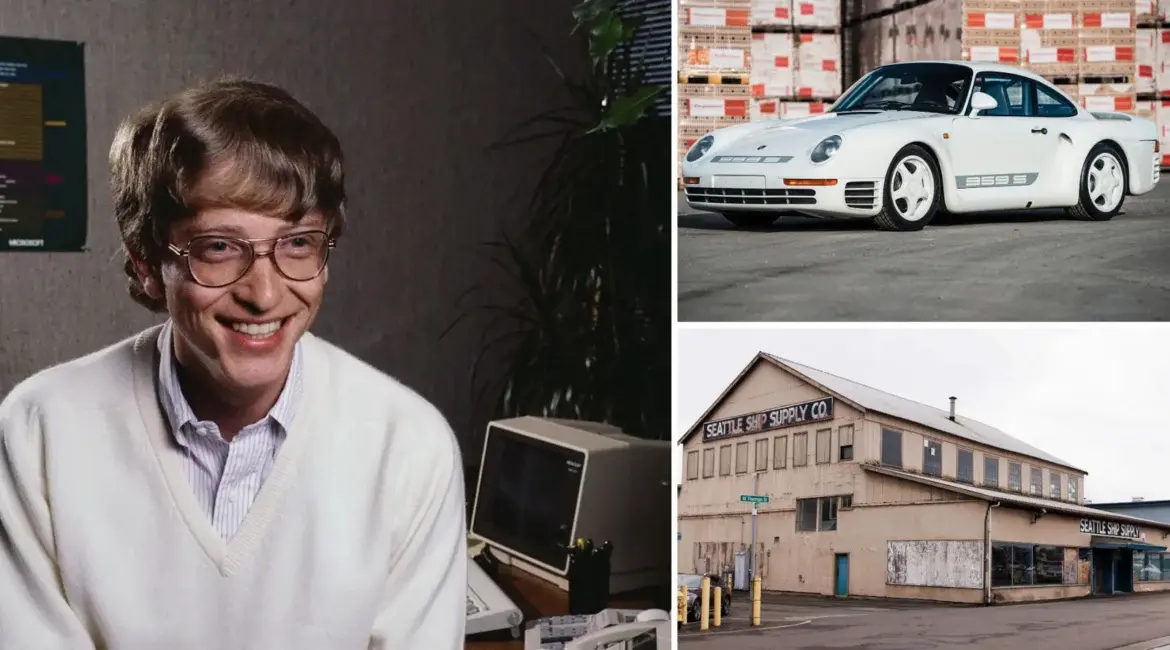
Long before Bill Gates became one of the world’s most prolific philanthropists, he was a technologist with a passion for performance. His love for Porsche was no secret. During the early Microsoft years, his growing collection of German-engineered machines included the classic 911 and the powerful 930 Turbo. But in 1988, he set his sights on something far more radical: the Porsche 959. This was a car so advanced it challenged not only the road but also the legal system.
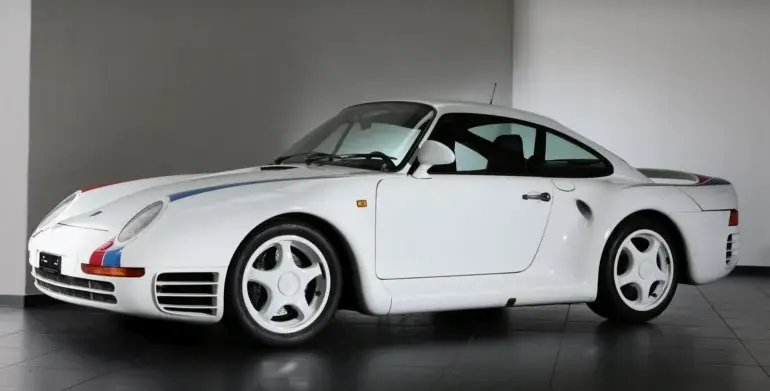
Developed during the experimental peak of Group B rallying, the 959 was Porsche’s attempt to fuse motorsport innovation with street-legal precision. Its specifications remain impressive to this day. It featured a 2.85-liter twin-turbo flat-six engine, a pioneering all-wheel drive system known as PSK, electronically adjustable suspension, and a body crafted from Kevlar and aluminum. It could accelerate from zero to sixty miles per hour in under four seconds and reached a top speed just under 200. At its launch, it was the fastest production car in the world and one of the most technically ambitious road cars ever made.
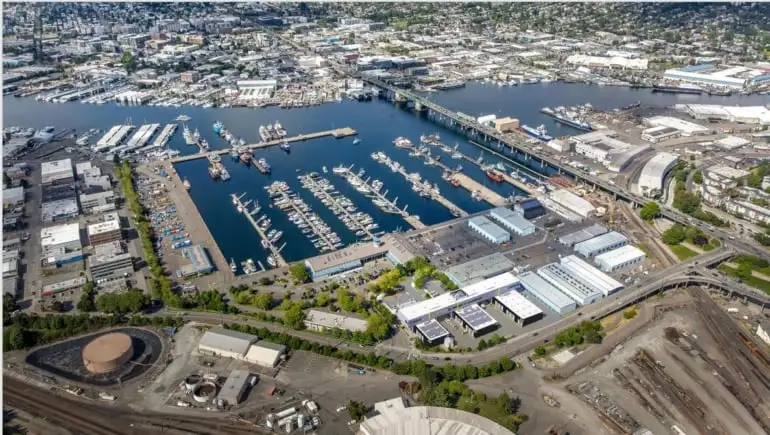
However, that ambition met resistance in the United States. The 959 had not been crash-tested to meet U.S. safety regulations, and Porsche, mindful of the limited production run, refused to provide a unit for destructive testing. Without EPA and DOT approval, Gates’s newly acquired dream car was stopped at the border by U.S. Customs. Instead of being crushed or returned, the vehicle was impounded at the Port of Seattle and stored in a Foreign-Trade Zone warehouse, suspended in legal limbo.
The Long Wait and the Quiet Standoff
Under the rules governing Foreign-Trade Zones, Customs was allowed to charge daily storage fees for goods held in bonded warehouses. For Gates’s 959, the fee was $28 per day. On paper, it was a modest charge. In reality, it became a quiet symbol of patience and persistence. Gates chose not to abandon or export the car. He paid the fee every single day. Not for a few weeks. Not for several months. For thirteen years.
By the time the car was finally released, Gates had spent over $133,000 in storage fees. Adjusted for inflation, that amount would be closer to $300,000 today. He also paid for annual bond renewals to keep the car in legal status. For someone of his wealth, the cost was not a financial burden. But the principle behind the decision held far more weight. The 959 was never just a car. It represented an idea, a belief that engineering could move ahead of its time, even if the legal system lagged behind.
To most of the public, this story remained largely unknown. There were no press conferences, no legal theatrics. Gates quietly paid the cost each day to keep the car in waiting. It was a standoff between regulation and innovation. Rather than challenge the system in court, Gates responded with quiet determination. In time, that patience, along with advocacy by car builder Bruce Canepa and attorney Warren Dean, contributed to changes in federal import laws. These efforts helped establish the “Show or Display” exemption, which allows rare and historically significant vehicles to enter the country under strict conditions.
What the 959 Meant and What It Changed
When Gates finally took possession of the 959, it was more than just a car being released from storage. It was a technological statement entering a world that had finally caught up. Features that once seemed futuristic, such as variable torque distribution, ride height control, and tire pressure monitoring, had become common in modern performance vehicles. The 959 had previewed the future of automotive design. Though locked away for years, it had never grown outdated.
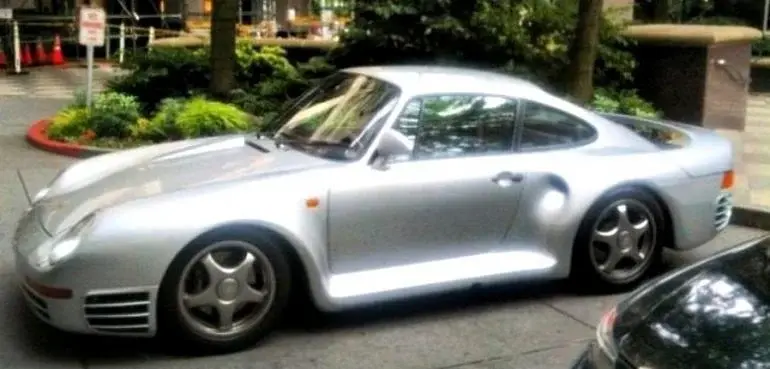
The car itself remained extraordinary, not just because of its speed, but because of its intelligence. Unlike many supercars that chase raw horsepower, the 959 emphasized balance, control, and precision. Its story became less about acceleration and more about what it represented. It challenged the idea that progress must wait for permission. For Gates, it also reflected a mindset familiar to anyone who builds lasting innovations. Great ideas are worth protecting, even if they require years of quiet endurance.
In the end, the Porsche 959 became more than a prized collectible or a piece of automotive trivia. It became a case study in belief. Belief in engineering. Belief in vision. Belief in the long game. Gates never drove the car during its thirteen-year captivity, but he never let go of it either. What began as a purchase evolved into a symbol. Sometimes, obsession rooted in admiration can become a form of investment. And in rare cases, the return is measured not just in performance, but in principle.