A Royal Presence in the Port of Durrës
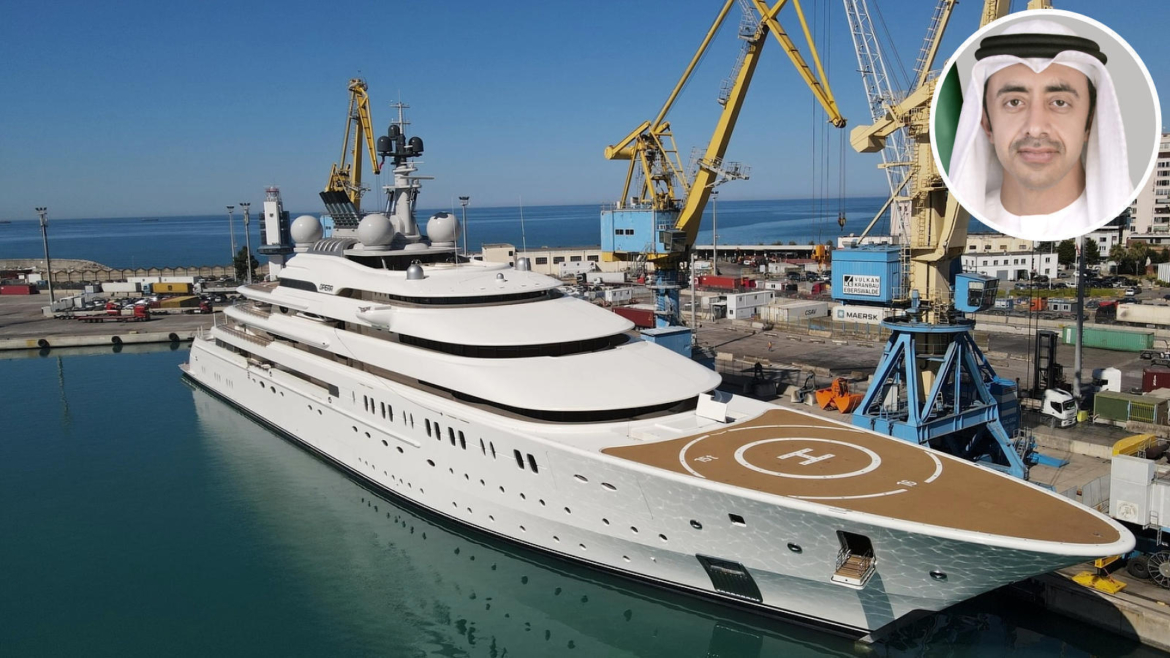
There are few spectacles more commanding than a megayacht at rest in a working port. When the 479-foot Opera, owned by Sheikh Abdullah bin Zayed Al Nahyan, UAE’s Foreign Minister, arrived in Albania’s busiest harbor, it didn’t just anchor—it loomed. Towering over cranes, cargo stacks, and dockside equipment, the $450 million Lürssen-built superyacht momentarily redefined the scale of the Port of Durrës. This was not a luxury vessel seeking a glamorous marina; it was a floating estate temporarily moored in an industrial artery of the Adriatic.
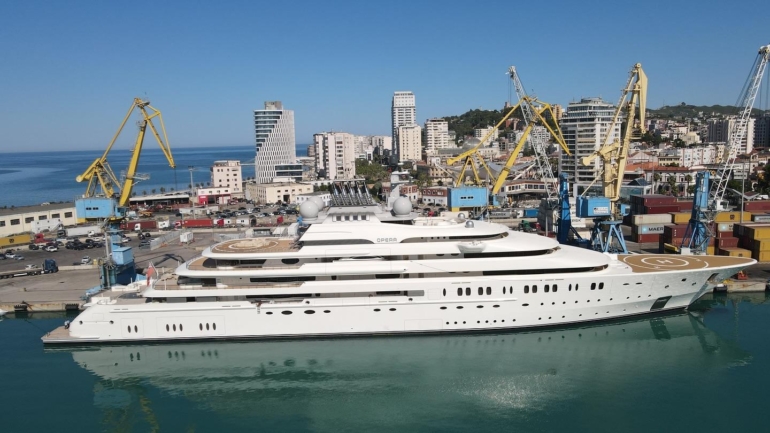
For a ship of Opera’s magnitude, even a routine refueling becomes an event. Reports indicate that the vessel took on approximately 320,000 liters of diesel—a logistical undertaking more aligned with commercial shipping than leisure cruising. The yacht’s gross tonnage of 12,500 GT places it in a rare echelon of private marine engineering, closer in form and function to a boutique cruise liner than a traditional pleasure craft. Its presence against the backdrop of shipping containers and weather-worn cranes created an image almost surreal—like watching a palace dock beside a freight terminal.
Owned by a royal figure from a region known for architectural ambition and refined taste, Opera represents a continuation of the UAE’s discreet yet unmistakable style of power projection. Even in a port accustomed to moving oil, minerals, and manufactured goods, the yacht’s arrival drew a different kind of attention. It served as a visual interruption—opulence anchored amid function—reminding onlookers that luxury can move, and when it does, it rarely goes unnoticed.
Architecture of Secrecy and Scale
Built by the renowned German shipyard Lürssen, Opera stretches nearly 480 feet in length, making it one of the largest private yachts in the world. Although much of its interior remains confidential—as is typical for vessels commissioned by ruling families—select details offer a glimpse into its extraordinary scope. Designed to host 48 guests across 26 cabins, supported by a crew of 40, the yacht functions less like a vacation retreat and more like a seaborne palace. Every design decision, from circulation to cabin layout, reflects a commitment to both discretion and grandeur.
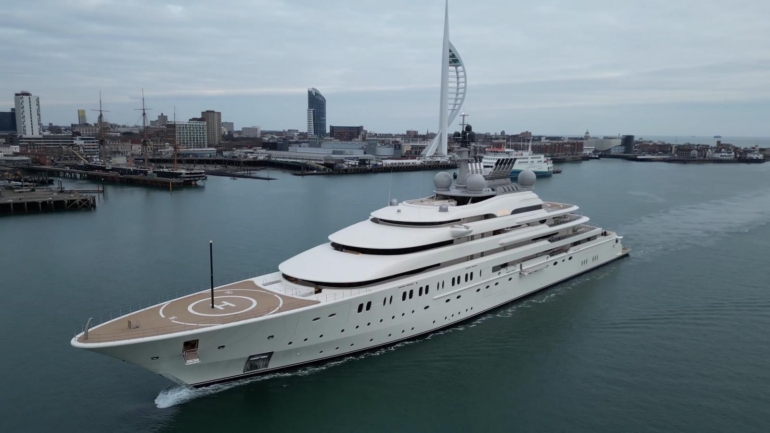
Known features of Opera include two swimming pools—one on the sun deck and another on the main deck equipped with a rise-and-fall floor that converts the space from aquatic to entertaining at will. Its twin helipads, positioned on the foredeck and stern, offer seamless aerial access for high-level arrivals and departures. Garages large enough to house tenders, Jet Skis, and other aquatic toys are integrated into the structure, a nod to both convenience and the expanding definition of maritime leisure.
But what sets Opera apart is not simply the sum of its amenities—it is the sheer harmony of volume, elegance, and restraint. Unlike yachts that broadcast their features with exhibitionist flair, Opera conceals much of its grandeur behind deliberate opacity. This is a vessel designed not to flaunt, but to affirm—a silent, steel-clad expression of influence. It sails not for spectacle, but for sovereignty.
A Venetian Interlude and Mediterranean Movement
After departing the Port of Durrës, Opera made its way northwest, docking quietly in Venice. According to MarineTraffic data, its arrival came just days after the city had played host to the high-profile wedding of Jeff Bezos and Lauren Sánchez—a moment when Venice had briefly become the epicenter of elite celebration. With the spotlight dimmed and the lagoon returning to a slower rhythm, Opera’s arrival seemed almost meditative, a gesture of retreat rather than arrival, of presence without demand.
The yacht’s journey across the Mediterranean is not simply a cruise; it is part of a ritual observed by vessels of this scale—one that blends discretion with visibility, motion with message. From the Adriatic coast to the canals of Venice, Opera moves with intention. Every port of call adds another layer to its maritime narrative, reinforcing the quiet diplomacy of yachting at this level. It does not need press releases or fanfare; its silhouette alone speaks volumes.
What remains unspoken, however, is often most telling. In an era when private wealth increasingly intersects with public space, yachts like Opera toe a delicate line—existing both as personal sanctuaries and public statements. Their journeys are less about distance than about declaration: of who has arrived, who belongs, and who never left. As Opera rests in Venice, it becomes more than a vessel. It becomes a chapter in the continuing story of modern power and its floating symbols.